


Why Diagnostic Tests Are Important For Your Pet
When your dog or cat has a health problem, our veterinarians at NA Veterinary Hospital use a variety of techniques to get to the source of the issue.
Changes in body temperature, weight, appetite and energy level can signal a problem that requires further investigation. Sensitive areas of the body or the animal’s reluctance to put weight on their limbs may signal an issue that is not visible on the surface.
In these cases, a veterinarian may advise one or more of a variety of tests that can provide information about what’s going on inside your pet’s body. In some cases, you may not even suspect your pet has a problem, but a test will reveal a health issue in the early stages so that it can be treated before it becomes a more critical health problem.
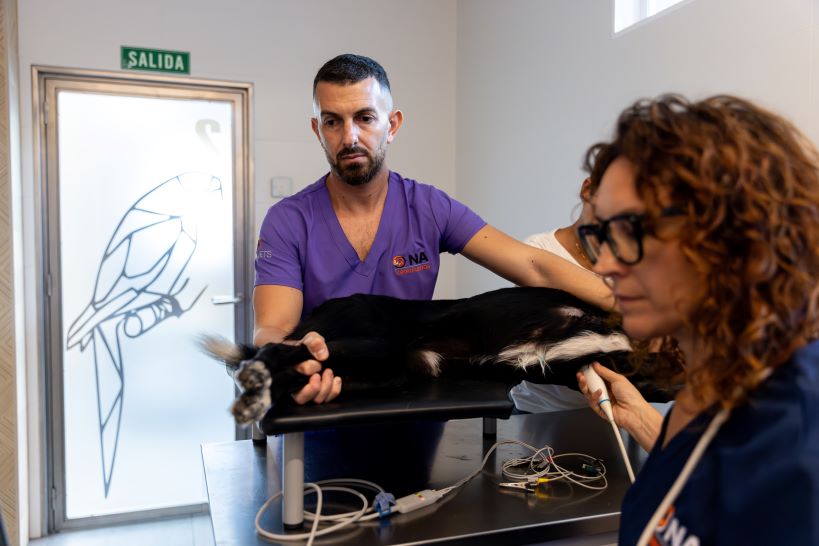
Common Veterinary Diagnostic Tests
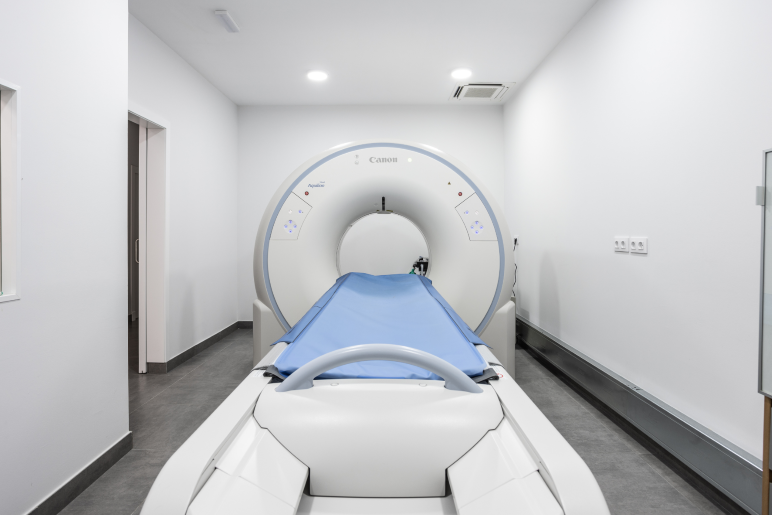
At Nueva Andalucía Veterinary Hospital, we offer diagnostic imaging tests such as:
- CT Scan: Computed Tomography, known as a CT scan, is an advanced diagnostic imaging technique. We’re one of the pioneering and most experienced centres in using this technique, having worked with the most advanced technology for over seven years. Our current equipment allows for high-speed scanning, reducing study times, ensuring maximum image quality and patient safety. Furthermore, when combined with the use of a contrast injector, it allows for more precise adjustment of exposure times and improved vascular studies in giant breeds.
- Advanced Ultrasonography: The image quality of the Toshiba Aplio 300 Platinum unit, in advanced ultrasonography for both abdominal and musculoskeletal soft tissues, enables high levels of diagnostic precision. This also combines with CT scans for highly accurate sample collection.
- Digital Radiography: This offers high-quality X-rays instantly, which is crucial for diagnosing bone, joint, and respiratory problems. The advantage is lower radiation exposure and improved image processing.
- Endoscopy and Fluoroscopy: Endoscopy allows us to directly visualise the inside of organs such as the digestive or respiratory system, perform biopsies, and carry out minimally invasive procedures. Fluoroscopy provides real-time, moving X-ray images, helping us to guide complex procedures or assess the dynamics of certain organs.